
My neighbors and I have many big healthy mature trees. It’s great for shade and ambiance, but growing trees sometimes need tree limb trimming. Sometimes tree branches grow so well that they start overhanging your roof line. At other times, a branch partially breaks or dies off. While big jobs may require a professional, this article suggests an inexpensive and SAFE way to do your own tree limb trimming with a minimum of hassle.
Options for Safe Tree Trimming
Paying someone to trim your trees can be the right thing to do. Hiring a certified Arborist is an excellent choice, especially if your trees are mature and have never been thinned out. An arborist knows which limbs may have been weakened by disease or from simple stuff like squirrels chewing all the bark off of branches. Darned squirrels – I love ’em but they are pesky sometimes.
Sometimes though, you just want a few limbs removed and you’d just like a simple and safe way to do it yourself. I don’t know about you, but I’ve decided I want to minimize my time on a ladder, especially outdoors and especially when around trees on uneven ground.
The pole is made from three pieces of rigid aluminum that easily slide inside each other and has well engineered locking handles to hold each pole in position. The bottom section of the pole is particularly rigid because it is extruded aluminum with ridges along the outer surface. It is about 6 feet long when contracted like this, but extends to 16 feet. This amount of adjustability makes it useful for a variety of jobs.
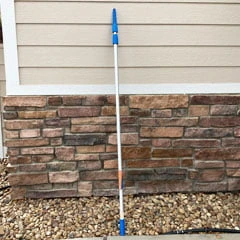
Several years ago, I bought this terrific tool intended for cleaning tasks like tall windows or high cathedral ceilings. It is a well made and sturdy aluminum extension pole.
You can easily change the length of the pole without using tools. It has good gripping surfaces and the locking mechanism works by just twisting adjacent sections of the pole. That’s nice when you are moving from area to area and need a slight adjustment to the pole length.
The end of the pole has two different types of attachment methods, accepting both tapered or threaded sockets. The threaded portion is called ‘Acme standard’. Does that make you think of Wylie Coyote and Road Runner? Okay, maybe you are younger than I am 😉
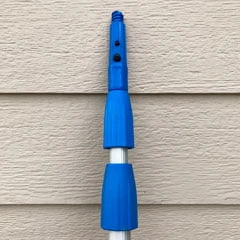
The extension pole is primarily marketed for household cleaning tasks like washing windows or skylights, cleaning cobwebs from cathedral ceilings, or wiping down dusty blinds. When I bought it, I got a squeegee, a glass mop and a soft cobweb brush. I started wondering if the manufacturer made a tree trimming blade that fit my setup.
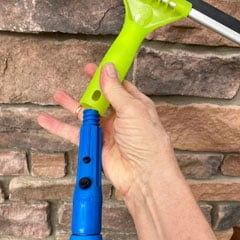
Tools like my squeegee just slip over the end and are held in place by the black tab. Press the bigger black button below it to release the tool.
So I searched on ‘tree trimming tool’ and ‘tree cutting attachment’ and got no results. After a long search I finally found a pruning saw that had a handle that looked like it might fit my extension pole.
Highly Effective and Safe Tree Limb Trimming
I wanted everyone to see how well this tool combination works, so there is nothing like a video to show it in action! Here is how I trim tree branches without a ladder.

I have a number of mature trees in my yard and have paid to have them maintained by an arborist. That can get spendy, though. So, I’ve come up with an easy way to remove unwanted branches while I’m standing safely on the ground. Here’s how.
I got this nicely made aluminum extension pole for cleaning windows and dusting cobwebs out of my cathedral ceilings. It’s simple to attach a squeegee, a window cleaning pad, or a soft brush for removing cobwebs. I found this fixed 14-in blade with big sharp teeth that are designed for tree trimming. It has a hook on the end for shearing off small branches and it allows it to hang on bigger branches to let you rest your arms while you’re doing the cutting.
My aluminum extension pole has two types of universal attachment points. A tool can slip over the top and clip into the black tab or in the case of this blade, the tool screws onto the standard size threaded end. Then you tighten the clamp at the base of the blade to hold it tight and to keep it from twisting while you are cutting.
This is the length of the pole when unextended about 7 ft including the blade. I need to extend the pole to reach up to the branch I want to cut. The pole has three pieces and it’s easier to hold it over your head if you extend the top (the thinnest) portion first. Don’t use the bottom portion unless you really need the length.
Make sure you have the pole adjusted to the right length before you start cutting. You can just use the hook on the end of the blade to hang it on the branch you’re targeting and make any minor adjustments from the ground. Make sure that the pole is long enough so that you can stand to the side of the branch being cut, as I show here. When the branch breaks free, make sure that it won’t drop onto something important like your head.
This branch cutting tool is great for branches up to about 3 inches in diameter. The branch in this video is about 2 and 1/2 inches thick and the entire branch weighs at least 50 lbs. This method is also limited to cuts that are mostly vertical. It doesn’t work very well in situations where you need to cut a tree limb that goes straight up from a horizontal branch because you just can’t get the angle on it. Okay, let’s speed it up through the rest of the cutting.
As the branch starts to fall, you may want to slow down and make sure that you’re not going to hit anything as the branch comes down. Mine is actually catching on the roof here a little bit. It’s outside of the frame, but it will eventually crash.
So, here’s what the end of my branch looks like. You can see that it’s about 2 and 1/2 inches in diameter and it’s kind of torn the bark from the tree on the end. This branch is from a crab apple tree. So, if your branches are tearing like this, you can try scoring the bark on the bottom of the branch before cutting it, and you may achieve a cleaner cut.
I have the 16 ft version of this lightweight aluminum extension pole. You can buy versions of this pole from 13 ft to 30 feet in length. I like this brand because it’s very lightweight for how rigid the pole remains even when fully extended. I’ll link the 18 ft version in the show notes since it’s the one that’s probably long enough to trim your trees without being too heavy to manipulate when it’s fully extended over your head. I’ll also link the 14-inch saw blade that I used in this video. Thanks for watching.
Selecting an Extension Pole for Tree Trimming
Tree limb removal can be easy and safe using the method I show in this video! The key is to have a well made extension pole and the right attachment. In my video, I use a 3-piece Unger extension pole that can be expanded to 16 feet long. The current version of this pole is their 18 foot version that you can find here:
This is a well made and sturdy extension pole with three sections. It will expand to 18 feet, yet only weighs a bit more than 3 pounds. The nylon adjusting handles are simple to use and the end of the pole accepts both threaded and slip-on tool attachments. Many different types of tools are made to perfectly fit this pole (but are not included).


Eighteen feet should be long enough trim most branches that you can see well enough to trim them. Anything higher than that probably should be left to the professionals. Note that there are a lot of cheaper versions that you will be shown as ‘similar items’, but they tend to flex badly and won’t last.
There are also heavy duty or longer versions that frankly are so heavy that they are hard to get into position, much less cut with them or safely bring the saw back down to the ground when you are done. Some poles are designed to work only with their own attachment systems instead of being more universal or standard like this one is.
Another factor in selecting an extension pole is how easy it is to make adjustments in length. Once you’ve adjusted the pole to the right length, does the locking mechanism stay locked? Does twisting or rotation cause it to loosen or slide? I have not had any of these problems with my Unger extension pole.
The Tree Trimming Tool
This pruning saw screws onto the Unger extension pole and is equipped with a clamp at the base that can be easily tightened using only your fingers (no pliers needed).
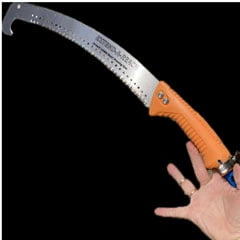
Pruning Saw with Acme Standard (twist on) base & retention clamp – [link opens a new window on Amazon]
Other Tips for Tree Limb Trimming
This method for tree limb trimming works best it the winter when you can see what you’re doing. Also, without leaves the limbs that you cut won’t weigh nearly as much. I thought I would put together some other questions that people often wonder about when they haven’t done their own tree limb trimming in the past.
Frequently Asked Questions
When is the best time to trim tree limbs?
The best time to trim deciduous (leaf bearing) trees is when they are dormant. Trim during winter months or just before trees bud out in early spring.
Evergreens are pretty tolerant of being trimmed any time of year, but avoid really hot and dry weather to avoid stressing the tree. Fruit trees MUST be trimmed when it is below freezing (if possible) to avoid getting fruit tree blight. This includes most flowering trees like Crab Apples and Hawthornes, even if they are ‘fruitless’.
How many limbs can safely be trimmed off of a tree?
Professional tree trimmers might remove up to 20 to 25% of the limbs in an overgrown tree, but DIY tree trimmers should limit themselves to far less than this. You will have better results if you concentrate on dead or diseased branches, or tree limbs that a problematic. Remember to plan ahead and visualize what the tree will look like without the branch: you can’t put it back.
Where exactly do you cut a tree limb?
Cut just outside the branch collar (the swollen area where the branch meets the trunk). Avoid cutting flush with the trunk or scoring the bark on the trunk of the tree. A good cut follows the line of the tree trunk – so the top and bottom of the cut is the same distance from the trunk. Also avoid leaving long stubs – typically the distance from the cut edge to the trunk should be less than an inch.
Elsewhere in this post, I’ve provided closeup photos that show examples of good cuts and also of what happens when you cut a branch in the wrong place.
Is it safe to trim large branches myself?
Large branch tree trimming should be left to a professional arborist. The DIY method described in the post is designed for branches that are less than 3 inches in diameter at the base. The base of the branch should be no higher than you can easily reach with your extension pole while standing off to the side so the falling branch will not hit you or anything in your yard.
Do not use the DIY tree trimming method described here if branches will fall on your roof (or neighbor’s roofs), if they are anywhere near utility lines, or will fall onto other trees or shrubs. This method is also designed for trimming limbs while standing on the ground. Do not use this method from a ladder.
How do I select branches to remove from my tree?
The best branches to target are: dead, broken or dying branches, branches that are rubbing or crossing each other, or branches that are growing towards structures (and will eventually hang over them).
What if the bark is tearing on the tree trunk when I trim my branch?
Tearing bark can expose your tree to stress or disease, so you want to avoid that when trimming. There are two main ways to avoid tearing: cut underneath the branch first – at the spot where the top cut will come through (called undercutting) – OR – just cut the branch out from the trunk about a foot to get the weight off of the branch, then trim again at the correct location.
Should I seal or paint the cut?
Generally you do not need to seal or paint the cut because trees heal naturally on their own. The best thing you can do for the tree is to make a nice clean and smooth cut at the right location.
Can tree trimming spread disease?
Yes – tree limb trimming can spread disease from tree to tree (or even from a diseased branch to a healthy branch) if your trimming tools are not clean. Wiping down your pruning saw with Isopropyl Alcohol between cuts is a good way to reduce the spread of disease. Also, some diseases are airborne such as fruit tree blight, so trimming trees is best done when temperatures are below freezing. If you live in an area where it rarely freezes, you should contact an arborist for guidance on fruit tree trimming in your locale.
Should I trim tree limbs that are near power lines?
No! If tree limbs are anywhere near utility lines of any kind, get professional help for trimming those branches.
What do I do with the branches that get cut off?
Check in your area for yard waste disposal options. Some communities have drop-off locations for branches. Compost collection rules often allow branches up to 3 inches in diameter to be cut into lengths and place in the compost bin. Thicker tree limbs also can be used for firewood after the small side branches are removed.
Do I need a permit to trim trees?
Check with your city or county for local rules on tree trimming. Also, your HOA may have tree trimming rules. Even if you don’t have specific rules for removing smaller branches, always be considerate of neighboring property that is close to the tree trimming area. Cut only branches on your own trees.
If it is winter, how do I know which branches are dead and which ones are alive?
Decide which branches to cut in during the growing months and mark them for removal in the dormant months. There are multiple ways to accomplish this. If you can reach the base of the branch, I like to spray a spot of spray paint on the branch so I can identify it in the winter. You can also take a picture of it with your phone – and there are markup tools on many phone camera apps to help you remember which branch was the target. Another method is to use your extension pole to drop something on the branch – such as a length of string or yarn to tangle in the side branches that will stay caught until it’s time to do the trimming.
Exact Location for Tree Limb Trimming
The optimum location for trimming a tree limb is just outside the branch collar (the swollen area where the branch meets the trunk). I think that pictures are the best way to explain this.
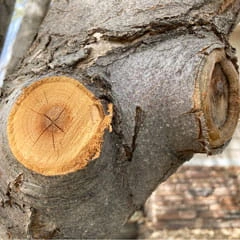
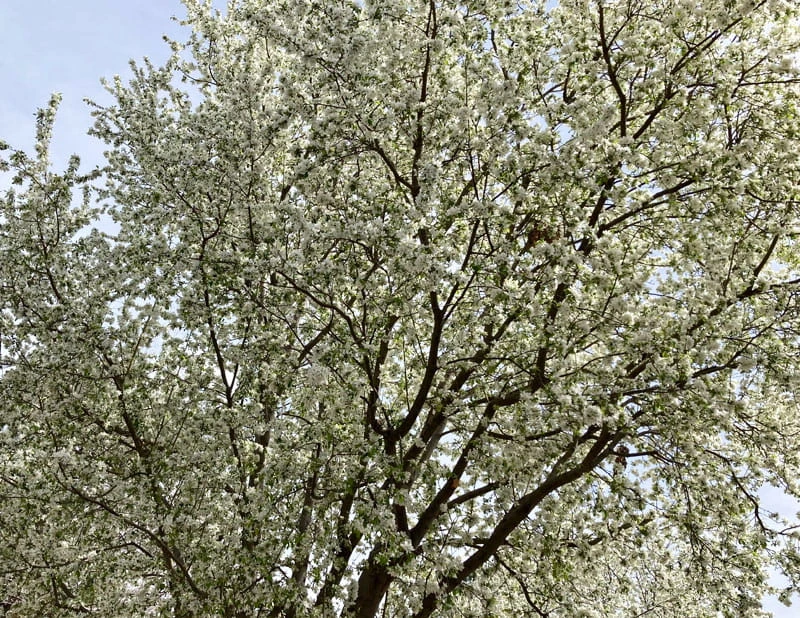
This is my Crab Apple tree. The cut on the left was made a few weeks ago and is showing signs of drying. The cut on the right was made several years ago and demonstrates how the tree eventually produces a ring around the cutting location to protect the tree.
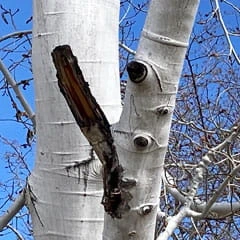
This Aspen tree shows several examples of what happens when a branch is not cut closely to the collar: the branch that is left can blacken, rot or provide a large surface for disease to infect the tree. The excess branch prevents the tree from being able to effectively heal the cutting location.
Ladder Safety and Tree Limb Trimming
Each year in the U.S., more than 500,000 people are treated and about 300 people die from ladder-related injuries.
To learn more about the quote above, you can visit the Center for Disease Control (CDC) website as they discuss ladder safety month. The safest way to trim tree limbs yourself is to NOT use a ladder!
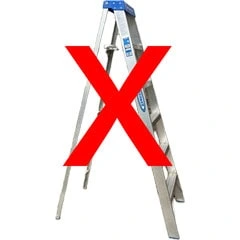
Stay safe by staying off of ladders whenever possible! Also – always plan ahead when trimming branches so that the branch has a clear space to fall on the ground.
Another great project for using your aluminum extension pole is cleaning gutters! Just like this tree trimming method – you can easily clean your gutters while standing safely on the ground. Learn all about it at: Gutter Cleaning: No Ladder Required!