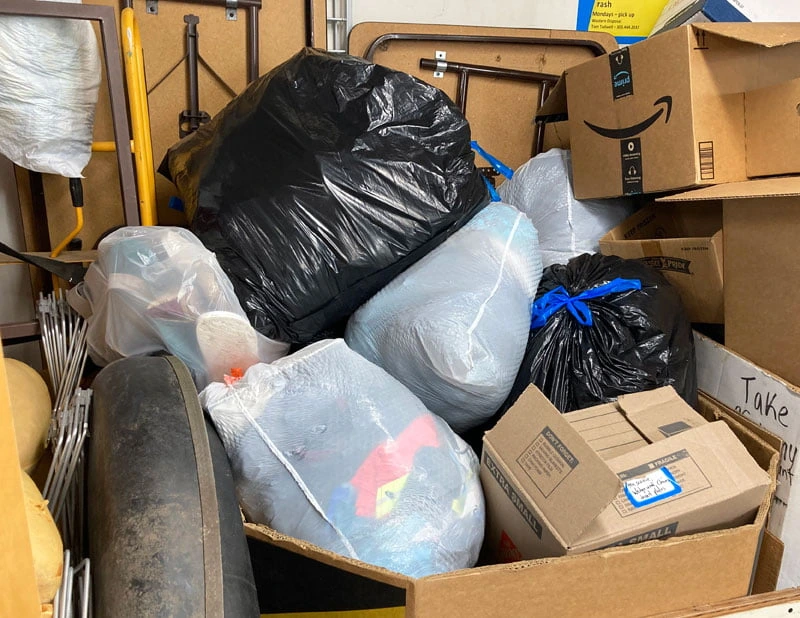
Have you ever wondered what happens to your stuff after you make a thrift store donation? I’ve volunteered at a local thrift store since 2016, going in to help sort and price donations at least once a week. There has been some interest about what happens to items that get donated, so I thought I’d go into some detail about what happens in the back room of the thrift store. While reuse and sustainability are among our goals, each shop or organization handles the deluge of donor’s unwanted goods in different ways.
A Deluge of Unwanted Stuff Donated to Thrift Stores
There is an enormous amount of stuff out there cluttering people’s homes and lives. The huge increase in articles about magic methods to deal with your clutter – in online magazines, YouTube videos, on social media posts – indicate that losing control of stuff has become a major problem in some households. The growth (and profits made by) companies offering extra storage is another indication.
While most people who donate stuff to thrift shops are generous and care about the organizations they are donating to, there is a certain segment that view donating as a way to get rid of trash. I think there is also a big gray area in-between where folks aren’t sure if something is reusable or not, so they err on the side of dropping it in the donation box. I thought I would write about what kinds of things make great donations and which ones don’t. I also cover what to do to maximize the probability that your stuff will find a good home.
Why Should You Care about Making a Good Thrift Store Donation?
Assuming that most people donate to organizations that they care for and the missions that are funded by the donations, it make sense to donate things that help that cause. One of the biggest expenses we have at a thrift shop is figuring out how to dispose of things we can’t sell. We try to keep things out of the trash (trash removal is expensive!) – and we want everything to find a home and get reused and loved by a new owner.
I want to emphasize that people working in thrift really are trying hard to support reuse and to not just dump things in the trash. Paying for trash volume is among our biggest expenses and takes money away from our mission, after all.
What Stuff Makes a Poor Thrift Store Donation?
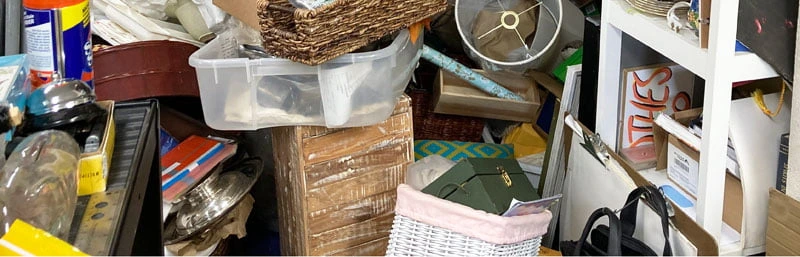
Thrift stores only survive if they can make enough money by reselling the items they receive for more than it costs to run a shop. Pretty obvious. Stores have to cover the cost of employees, rent, utilities, trash removal – all the costs of a normal retail business. Sure – there are people like me who volunteer, but it has gotten harder and harder to make enough to help fund those good causes that underlie many .ORGs that run thrift stores.
You can help by keeping two main things in mind:
- Would Anyone Want This? – If you can visualize a use for an item, whether it is the original purpose, or some kind of crafty re-purposing of an item, it is probably a good donation.
- Am I Donating to the Right Place? – A lot of time, the chance of something getting re-purchased and used has to do with sending it to a thrift store that specializes. The best example I know of this is donating building supplies and remodeling discards to an organization like Habitat for Humanity’s ReStore organization.
Here are some specifics that can help you decide: to donate or not to donate.
Big Stains
Spilled Red Wine on your white blouse? We can’t get that out either and it is rare to find someone that will spend even a couple bucks on it on the chance that they can get it out. Linens like sheets and table cloths that have even small stains cannot be sold. People will buy colored towels that are a bit faded, but they absolutely avoid a white towel that has turned yellow.
I think there is a mis-conception that thrift shops have the ability to wash, clean and rehabilitate stuff before selling it. We don’t. We don’t have the resources, equipment or time to do anything but sort, price and arrange items.
Smelly and/or Dirty
Frankly, if we get a big plastic bag full of clothes or linens that, when you untie the bag, wafts out a cloud of stink, we will tie the bag back up and put it in the outgoing pile. Through experience, we’ve learned that the likelihood of some really valuable item being in the bottom of that pungent bag is very low.
Non-Working, Broken or Missing Critical Pieces
After years of accepting small appliances, hair dryers, heaters, fans and the like, we have had to stop because so many ‘items with a cord’ just don’t work. Testing takes time and sometimes there are things that we can’t adequately test, which makes for unhappy customers and returns.
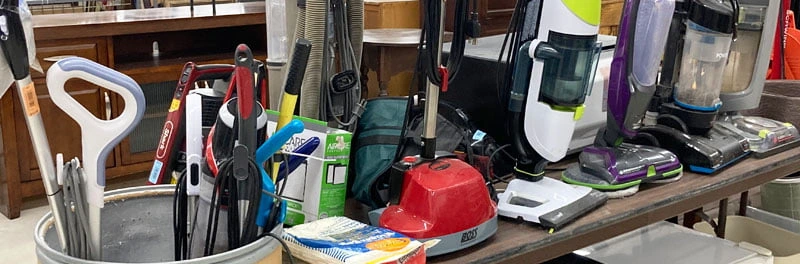
Another group of thrift store donations are things that are missing critical pieces. If the carafe for the coffee maker is broken, selling the coffee maker itself is nearly impossible at any price. We get electric blankets without the specialized heating elements and rechargeable tools without the charger – these things have to go in the trash. Worst offender in this category: Vacuum cleaners of any kind.
Excessive Wear & Tear
That set of glasses that are intact, but cloudy from wear or use? We can’t sell those. Towels that have strings hanging from the edges? There are only so many of those that we sell in the discount ‘rag bin’. A sweater covered with ‘pills’? Impossible to sell.
What Is This Thing?
One of the amusing parts of volunteering in thrift is the occasional unusual or random item that we find in a thrift store donation box. Sometimes though, we just can’t figure out what some things are. We really appreciate the people who write us a little note that explains things, or mentions a size or information that will help us find a new home for an unlabeled treasure. Dates or historical information about vintage items like clothing or jewelry is particularly valuable.
Outside the Organization Mission
Consider the mission of the organization that you donate to. Some items may not be accepted because there is a mismatch with the non-profit’s mission.
As an example, the shop I volunteer at benefits small wild animals and birds, so we will not accept anything that is made from real fur or feathers. Many of our organization’s supporters and donors also shop at our store and would find those items offensive.
Options for Donation or Reuse of Items that Thrift Shops Can’t Resell
Sometimes it is helpful to know which specific things that thrift shops struggle to sell or must pass on for other reasons. Even more importantly, I think it is useful to offer alternative ways to reuse or at least properly dispose of unwanted items. Keeping things out of our landfills is important!
Bicycle Helmets
Unless items are donated ‘new in the box’, we will not put safety related items in our shop. This goes for things like children’s car seats or smoke detectors – we just don’t want anyone to get hurt by a non-working, defective or out-of-date product.
What else can you do? Sometimes you can donate items to groups that specialize in the item or activity. Community bicycle repair programs may know which bicycle helmets are the good ones. Shops specializing in children’s items may accept car seats from certain brands or more recent models. Home building supply thrift shops are more likely to take smoke detectors or other construction related items.
Stained Sheets
Bed linens are hard enough to sell, even when we have the entire set and they are in good shape. Anything stained or ripped will result in the whole set being tossed in the outgoing textiles pile. This is true for table cloths and towels, too.
What else can you do? Save a stained flat sheet to use as a drop cloth for your next painting project! A fitted sheet can make a good couch cushion cover if you can’t manage to keep your sweet hairy beast off the furniture. Some animal shelters will take certain textile items for use with the animals they serve. For example, the animal shelter associated with our thrift shop will take cotton pillowcases to drape over the small animal cages to signal nap time.
Non-profits often have a page on their website for items that they accept as donations. For example, one organization I volunteer for does outdoor trail building and wildlands restoration. One of the interesting things they are always looking for are those small plastic gas cans. You never know where your unwanted stuff might find a better home!
Reusable Grocery Bags
Thrift shops get a huge number of these bags because people use them to package up their donations. We try to sell them, but only about 10% of the nicest ones are marketable. We also try to give them to people buying items from the shop, but we always have too many!
What else can you do? Take reusable bags to the grocery store! Several of the local markets I shop at have a receptacle by the front door for “donate a bag / take a bag”. When we have too many at the thrift shop I just take a batch to the grocery store with me. By the time I check out with my groceries, I have seen people picking through the new selection of bags.
Wire Hangers
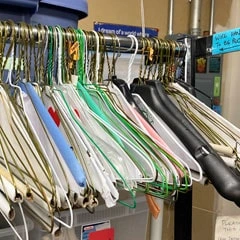
Sometimes we get clothing that is still on the wire hanger from the dry cleaners – that’s cool, as it sometimes is an indication that the clothing is clean. Other times though, we get a bag of tangled up wire hangers which can take a while to sort out (I expect some shops just throw them in the trash). No one buys wire hangers.
A collection of wire hangers waiting to get reused by returning them to the dry cleaning shop.
What else can you do?
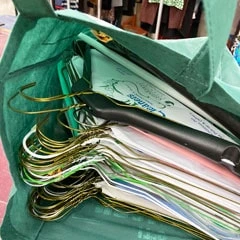
Take wire hangers back to the dry cleaners when you are dropping off things to be cleaned. Most cleaners are happy to reuse wire hangers, especially when not in a tangle. I package hangers all in the same direction inside one of those reusable grocery bags, then tie the handles to keep tangles from happening.
Vacuum Cleaners
Sadly, the world is full of crummy vacuum cleaners. Even if they turn on, they tend to have poor suction, are clogged, have a broken belt, are missing attachments or other problems.
Quite frankly, most vacuum cleaners are filthy by the time they get donated. They often come filled with debris in the vacuum chamber like this one.
Please don’t donate dirt.
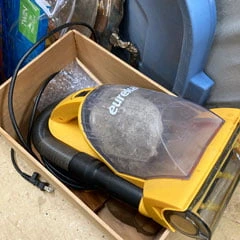
What else can you do? YouTube abounds with videos on how to repair vacuums that won’t suck stuff up. However, if your vacuum really is a lost cause, the right thing to do is to take it to small appliance recycling program if your locality has one.
Swimwear and Underwear
Unless new and in the original package or with the sales tags still attached, we just can’t resell these items for sanitary and hygienic reasons.
What else can you do? Some organizations such as homeless shelters or domestic abuse protection centers may have facilities and staff to sanitize items before distributing them. Your best bet is to check the organization’s website or call them for donation guidelines. These centers can also be great places to take things like opened personal care items (like shampoo or conditioner) or that box full of new toothbrushes and tiny floss containers that the dentist gives you and you don’t end up using.
Packaging Items
The clear glass vase from the florist was pretty when it had flowers in it, but thrift shops receive far more of them than we could ever sell. We have learned to pick out a few of the most interesting ones and to not spend time on the rest.
There are many items that are donated that are essentially product packaging. An empty liquor or beer bottle (even the slightly decorative types)? Jars with lids from the grocery store? Takeout plastic containers? Wine bottle corks?
What else can you do? Please recycle any of these things that you can. A tip for the wine bottle corks: some larger liquor stores may have a cork recycling container in the store entrance.
Final Thoughts
The best way to support the organizations that you love that have thrift stores is to donate things that are truly reusable. Try to think “would I buy this item at a thrift store if I needed one?” If the answer is “Yes”, we really appreciate your support!
Beyond thrift shops that exist for local organizations, there are people out there that are developing solutions for dealing with unwanted stuff on a more industrial scale. I found a great book that discusses some of the companies, processes, and global efforts to reuse things. If you are interested in knowing more about this subject, this book is a perfect next step.
Checkout this fascinating book that examines what happens to all the stuff that can't get reused or resold in Thrift Stores in the US. Learn more about the Global markets that have evolved to deal with our excess of secondhand goods.

New to Thrifting? Learn about the benefits of creative reuse for yourself and the world in Benefits of Thrifting – Top 10 Reasons for Thrift Shopping.
Have you ever considered taking a thrift store road trip? Thrifting in other cities or regions can turn up some very interesting and design-forward items that don’t typically show up in local stores. For an introduction to my travel-based thrifting series, checkout Thrift Shop Junkie: Oakland & Berkeley California or Thrift Store Junkie: Explore Glenwood Springs, CO.